




Table of Content
ABS vs Polycarbonate Luggage: Which One Should You Choose?

If you are comparing ABS and polycarbonate luggage, the real question is not just which material sounds better on paper, but which one makes more sense for the way you actually travel. In most cases, polycarbonate is the stronger and longer-lasting option, while ABS is more appealing for its lower upfront price. The right choice depends on how often you travel, how much stress your luggage is likely to face, and whether you care more about saving money now or getting more long-term use out of the suitcase.
What Is the Difference Between ABS and Polycarbonate Luggage?
At first glance, ABS and polycarbonate can seem fairly similar. Both are used in hard-shell luggage, and both are often presented as durable materials. The difference shows up once the suitcase starts real travel, especially when it is used as carry-on luggage and handled repeatedly at airports. They respond differently to pressure, impact, long-term use, and everyday wear, which is why the choice matters more than it first appears.
Rigidity vs Flexibility
ABS is the more rigid material, while polycarbonate has more flex. That flexibility is one of the main reasons polycarbonate is often seen as the stronger option. A more rigid shell can show stress more easily at the point of impact, while a more flexible shell is better able to absorb force and recover its shape afterward.
Impact Resistance and Crack Risk
This is where the gap becomes easier to notice in real use. ABS can work well for lighter travel, but it is generally more prone to cracking under heavier pressure or rougher handling. Polycarbonate is better at taking impact without failing in the same way, which makes it a more reassuring choice for travelers who check luggage often or expect their suitcase to go through harder use.
Price and Weight Differences
ABS usually has the advantage in price, which is why it is common in more budget-friendly luggage. Weight is less straightforward. Some ABS suitcases are lighter, but that is not always true across the board because total weight also depends on shell thickness, overall construction, and the rest of the suitcase design. In practical terms, price is the clearer ABS advantage, while weight should be judged by the full product rather than the material name alone.
|
Factor |
ABS Luggage |
Polycarbonate Luggage |
|
Flexibility |
More rigid |
More flexible |
|
Impact resistance |
Lower |
Higher |
|
Crack risk |
Higher under pressure |
Lower in most cases |
|
Price |
Usually lower |
Usually higher |
|
Long-term durability |
Better for lighter use |
Better for frequent use |
|
Best fit |
Budget and occasional travel |
Frequent travel and rougher handling |
In simple terms, ABS is usually the cheaper option, while polycarbonate is usually the stronger and more travel-ready one. Similar trade-offs show up in comparisons like polypropylene vs polycarbonate as well.
Price, Durability, and Value: Which Trade-Off Makes More Sense?
This is where the decision becomes practical. Most buyers are not choosing between two abstract plastics. They are choosing between lower upfront cost and stronger long-term durability. One material can be easier on your budget now, while the other may hold up better over repeated trips and rougher treatment.
Lower Upfront Cost vs Longer-Term Durability
ABS helps keep the purchase price down. Polycarbonate usually costs more because it is built around better impact resistance and longer-term performance. If you only look at the price tag, ABS can seem like the better deal. If you look at how long the suitcase may stay in good shape, polycarbonate often looks stronger.
When ABS Offers Better Short-Term Value
ABS makes the most sense when you want the best hard-shell suitcase at a lower price and do not expect heavy long-term use. That usually means occasional travel, lighter handling, or trips where the suitcase will not be put under frequent checked-baggage stress. In that situation, spending less upfront can be reasonable.
When Polycarbonate Offers Better Long-Term Value
Polycarbonate usually makes more sense when durability matters enough to justify the extra cost. That can mean more frequent travel, more packed trips, or simply wanting a suitcase that is less likely to show stress early.
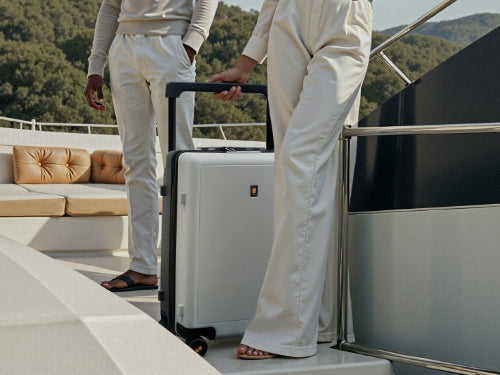
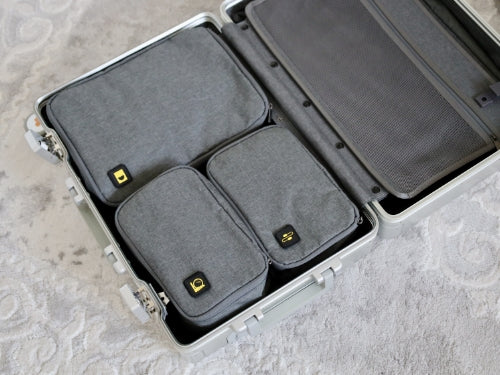
The LEVEL8 Adventure Carry-On 20'' is a good example of how the value of polycarbonate is not only about shell strength. It uses a German-made Makrolon® polycarbonate shell and adds a front side-lid opening, expandable capacity from 45L to 50L, a wide trolley handle, dual-spinner wheels, a TSA-approved lock, and an interior compression system.
That combination shows why some travelers pay more for polycarbonate. They are often paying for a better long-term travel setup, not just a different shell label.

Which Material Makes More Sense for Your Travel Style?
The better material becomes easier to judge once you stop asking which one is better in general and start thinking about how the suitcase will actually be used. Price matters, but so do trip frequency, baggage handling, and whether you usually travel with a carry-on or a checked bag. A material that feels perfectly acceptable for occasional short trips may feel much less reassuring once travel becomes more frequent or the luggage starts facing rougher treatment.
Better for Budget Buyers and Occasional Trips
If you only travel a few times a year and mainly want a lower-cost hard-shell suitcase, ABS can still be a reasonable choice. Its main advantage is affordability, which makes hardside luggage more accessible without requiring a bigger upfront investment. If the suitcase is not going through repeated heavy use, the lower price may matter more than the durability gap.
Better for Frequent Flyers and Checked Luggage
Once travel becomes more regular or the suitcase is checked more often, polycarbonate usually makes more sense. Checked baggage goes through more pressure, impact, and rough handling, which is where stronger impact resistance becomes more valuable. ABS can still work, but its limits are more likely to show up under heavier use. For travelers who fly regularly or want luggage that feels more dependable over time, polycarbonate is usually the safer choice.
A checked suitcase like the LEVEL8 Voyageur Check-In, available in 26'', 28'', and 30'' sizes, is a good example of why travelers often lean toward polycarbonate here. Its Makrolon® shell, larger capacity, quiet spinner wheels, TSA lock, and organized interior make more sense in heavier-use travel than a cheaper shell that may feel less reassuring over time.
Checked Luggage vs Carry-On Use
The difference between ABS and polycarbonate becomes much clearer once you separate checked luggage from carry-on use. Checked bags face more impact, pressure, and rough handling, so shell strength matters more and polycarbonate usually has the stronger case.
Carry-ons go through less abuse, which is why ABS may still feel acceptable for lighter travel. In other words, the more your luggage is checked, the more polycarbonate tends to make sense. The more it stays with you as a carry-on, the more reasonable ABS can become if budget is a bigger priority.

Does Material Alone Determine Luggage Quality?
Not really. Material matters, but it does not tell the full story. Two suitcases can both mention polycarbonate or ABS and still perform very differently because of shell construction, blended materials, hardware quality, and overall design. This is one of the main reasons buyers get confused when comparing luggage. The shell material gives you part of the answer, but not the whole one.
Pure Polycarbonate vs PC/ABS Blends
One important detail is that not every hard-shell suitcase is made from one pure material. Some are built with blended shells, which are often used to improve on pure ABS while keeping the cost lower than full polycarbonate. That is why it is worth checking the exact material description instead of relying on a broad hardside label alone.
Shell Thickness and Overall Construction
Construction still matters a lot. Even a stronger material can disappoint if the shell is too thin or the overall build is weak. Corners, shell structure, and the way the case is put together all affect how much protection and durability you actually get in real use. Material gives you the foundation, but construction determines how much of that advantage you actually feel over time.
Wheels, Handles, and Zippers Still Matter
Shell material gets most of the attention, but wheels, handles, and zippers often take just as much stress in everyday travel. A suitcase with a better shell can still underperform if the wheel system is weak, the handle feels unstable, or the zipper quality is poor. That is why luggage should be judged as a complete product, not just by the shell material printed in the specs.
Conclusion
ABS can be a practical choice if your priority is a lower upfront cost and your travel needs are lighter. Polycarbonate usually becomes the better choice once durability, impact resistance, and longer-term value matter more. For frequent travelers, especially those who check bags often, polycarbonate is usually the safer investment. The better option depends on whether your priority is lower cost for lighter use or stronger durability for the long run.
FAQ
Is polycarbonate luggage better than ABS?
Usually yes, if durability and impact resistance are your top priorities. Polycarbonate is generally the stronger and longer-lasting option, while ABS mainly stands out for its lower price.
Does ABS luggage crack more easily?
It can. ABS is the more brittle material, so it is more likely to show damage under repeated pressure or harder impacts. That is why it can feel less reassuring for heavier use or frequent checked travel.
Is ABS luggage good enough for carry-on travel?
It can be, especially for occasional trips and lighter use. Because carry-on luggage stays under your control more of the time, ABS may still be a reasonable choice for travelers who want a lower-cost hard-shell suitcase and do not need the same level of long-term durability.
What is the difference between pure polycarbonate and PC/ABS luggage?
Pure polycarbonate is usually the more premium option for flexibility and impact resistance. PC/ABS luggage uses a blended shell, often to improve on pure ABS while keeping the cost lower than full polycarbonate. That is why checking the exact material description is more useful than relying only on a general hardside label.


Leave a comment