



Table of Content
What Is Not Allowed on an Airplane Carry-On? TSA Rules Explained

Carry-on rules are easy to oversimplify. The real issue is not just whether an item is “allowed on the plane,” but whether it can pass through the security checkpoint and stay in your carry-on bag. Some items are banned from carry-on but allowed in checked luggage, some must stay in carry-on instead of checked baggage, and some are restricted either way. TSA’s item database is still the best starting point, but knowing the high-risk categories in advance makes packing much easier.
Liquids, Gels, and Aerosols Not Allowed in Carry-On
Liquids are still the category that catches the most people. The problem is not that liquids are banned outright. It is that carry-on liquids have to fit a very specific checkpoint rule, and many everyday items that do not look unusual at home still count as liquids or gels at screening.
The 3-1-1 Rule for Carry-On Liquids
For standard carry-on screening, the TSA liquid limit generally means liquids, aerosols, gels, creams, and pastes need to be in containers of 3.4 ounces or less, and those containers need to fit inside one quart-size bag. If the item is larger and not covered by an exception, it should not be in your carry-on at the checkpoint.
Common Liquids and Gels Restricted in Carry-On
This is where people often get tripped up. Shampoo, sunscreen, lotion, toothpaste, peanut butter, soft cheese, yogurt, dips, sauces, and similar spreadable or gel-like items can all trigger the liquids rule if the container is too large. The easiest way to think about it is simple: if it pours, sprays, squeezes, spreads, or behaves like a gel, TSA may treat it as part of the liquids category.
When to Pack Them in Checked Luggage
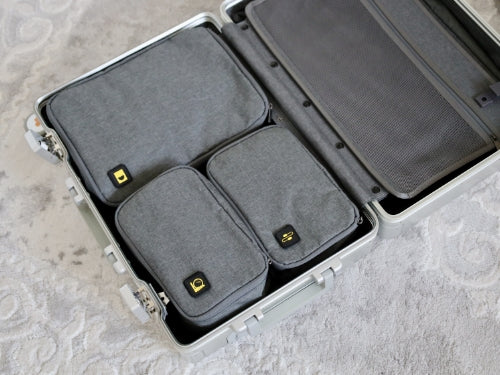
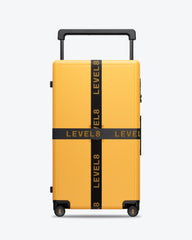
If the item is larger than the carry-on liquid limit and does not qualify for an exception, checked luggage is usually the better place for it. For the liquids you do keep in your carry-on, quick access still matters at the checkpoint. A carry-on like the LEVEL8 Voyageur Carry-On 20'', with separate pockets and a wet-dry section, can make it easier to keep compliant toiletries apart from clothing and other travel items.
Batteries, Power Banks, and Electronics
Battery rules are one of the most misunderstood parts of air travel because they often work in the opposite direction from what people expect. Many travelers assume battery-powered items are safer in checked luggage, but spare lithium batteries and power banks are exactly the kind of items that usually need to stay with you in the cabin.
Spare Lithium Batteries and Power Banks
Power banks, spare lithium-ion batteries, and battery charging cases are not supposed to go in checked luggage. They need to be packed in carry-on baggage instead. This is one of the clearest examples of a rule that is about safety rather than convenience.
What Must Stay in Carry-On
In practical terms, spare batteries, power banks, and many small electronic accessories belong in your carry-on, not your checked bag. That also means access matters. If you need to remove electronics or chargers during screening, it is much easier when they are packed in a section you can reach quickly instead of being buried under clothing. A carry-on like the LEVEL8 Adventure Carry-On 20'', with its front side-lid opening and more accessible layout, fits that kind of travel use especially well.
Portable chargers are also one of the most commonly misunderstood carry-on items, so it is worth checking the details before you travel. If you want a more specific explanation, see our guide on Can I bring a portable charger in my carry-on.
Battery Size Limits and Airline Approval
Smaller lithium batteries are generally straightforward, but larger ones can trigger extra restrictions. Once you move above the standard 100-watt-hour threshold, airline approval may be required, and the rules become more specific. That is why battery size is one of the categories where checking both TSA and airline guidance before you leave matters more than guessing at the airport.

Sharp Objects, Tools, and Self-Defense Items
This category causes confusion because the rule is not simply about whether an item looks dangerous. TSA pays more attention to what the item is classified as, whether it has a blade, whether it can cut or puncture, and in some cases how large it is. That is why two items that seem similar in daily life can end up following very different carry-on rules.
Knives, Razor Blades, and Box Cutters
Most knives are not allowed in carry-on luggage. Box cutters and utility knives are also not allowed through the checkpoint, and loose razor blades or razor-type blades that are not enclosed in a cartridge are prohibited as well. Disposable razors are treated differently and are allowed in carry-on, which is one reason travelers often assume all razors follow the same rule when they do not. Scissors are another easy point of confusion because they can be packed in carry-on only if the blades are less than 4 inches from the pivot point.
Tools Not Allowed in Carry-On
Tools are not automatically banned, but size and design matter. Tools longer than 7 inches generally need to go in checked baggage, and power tools are not allowed in carry-on. Multi-tools with knives of any length are also prohibited in carry-on, while some multi-tools with scissors under 4 inches may be allowed. This is why “small tool” is not a safe rule of thumb. A tool may still be restricted because of a blade, a sharp point, or its total length.
Self-Defense Items and Special Restrictions
Self-defense items are one of the least consistent categories, so they need extra caution. Pepper spray is not allowed in carry-on, though one 4 fl. oz. container may be permitted in checked baggage if it has a safety mechanism and meets the tear gas limit. Stun guns and shocking devices are also not allowed in carry-on, though they may be allowed in checked baggage with special handling rules. Bear spray is more restricted and is not allowed in either carry-on or checked bags. This is a category where checking the exact item before you pack matters much more than relying on a guess.
Firearms, Flammables, and Other Prohibited Items
Some categories are much less flexible. Firearms, flammables, corrosives, and explosive materials are where the line gets much harder, and mistakes here can lead to serious delays, confiscation, penalties, or worse.
Firearms and Ammunition
Firearms cannot go through the checkpoint in a carry-on bag. In some cases, they can travel in checked suitcases, but only if they are unloaded, locked in a hard-sided container, and declared to the airline at check-in. Ammunition can also be subject to airline-specific rules, which is why this is not a category to handle casually or assume from memory. If a traveler is bringing a firearm, the rules need to be checked before leaving for the airport, not at the counter.
Hazardous Items Not Allowed in Carry-On
Some hazardous items are stopped at the checkpoint because they are not allowed in carry-on baggage, even if travelers assume they can simply keep them in a cabin bag. This category often includes flammable sprays, fuels, chemical products, and other materials that create a safety risk in the passenger cabin. The key point here is that carry-on rules become much stricter once an item is flammable, corrosive, or reactive. If something falls into that category, it should never be treated like a normal toiletry or household item.
Hazardous Items Not Allowed on the Plane
Some hazardous items go beyond carry-on restrictions and are not allowed on the aircraft at all. In those cases, moving the item from your carry-on to your checked bag does not fix the problem. Fireworks are one of the clearest examples, but the same logic applies to other explosive, highly flammable, or strongly corrosive materials. If the item itself is considered unsafe for air transport, the issue is no longer where you pack it, but the fact that it cannot travel with you by plane in the first place.
What People Often Get Wrong About Carry-On Rules
Most carry-on mistakes are not about trying to break the rules. They happen because people generalize from one item to another, assume common-sense categories line up with TSA categories, or remember an old rule that no longer tells the full story.
Confusing Carry-On Bans with Full Flight Bans
A carry-on ban does not always mean an item is banned from the trip entirely. Some things simply cannot go through the checkpoint and need to be checked instead. Others, like spare lithium batteries, work the opposite way and must stay in carry-on baggage.
Forgetting Some Foods Count as Liquids or Gels
Travelers often think of food as separate from the liquids rule, but that is not how screening works. Many foods count as liquids, gels, or spreadables for TSA purposes, which is why soups, dips, and similar items can become checkpoint problems even when they seem harmless.
Assuming Similar Items Follow the Same Rule
This mistake usually happens when travelers group similar-looking items together too quickly. A disposable razor is allowed in carry-on, but loose razor blades are not. Small scissors under 4 inches from the pivot point are allowed, but longer scissors are not. Food creates the same problem. Dry snacks are usually fine, while spreadable items like peanut butter or jam can fall under the liquids and gels rule. What matters most is not whether two items seem similar, but how TSA classifies the exact item at screening.
How to Check an Item Before You Pack
The easiest way to avoid checkpoint surprises is to stop relying on memory for borderline items. The rules are detailed, and some categories have exceptions, so the best last step before travel is always a quick verification.
Use the TSA “What Can I Bring?” Tool
If you are unsure about one item, the TSA item database is the best place to start. It is built exactly for these borderline questions and makes it much easier to check whether something belongs in carry-on, checked baggage, or nowhere at all.
Check Airline Rules for Batteries and Firearms
TSA rules are only part of the picture for certain categories. Batteries over standard thresholds and firearms can involve airline-specific policies on approval, packing, and acceptance. That is why checking the airline matters most for these categories, even after you understand the TSA rule.
Repack Questionable Items Before You Leave
If an item still seems questionable, move it before you get to the airport. Repacking at home is always easier than repacking at the checkpoint. This is also where a carry-on with a more structured interior can help, since it is easier to separate liquids, electronics, and quick-access items before screening rather than digging for them at the last minute. The Voyageur and Adventure carry-ons both fit that kind of prep-focused packing better than one large open cavity.
Conclusion
The safest way to think about carry-on restrictions is by category, not by guesswork. Liquids, spare batteries, blades, tools, firearms, and hazardous materials each follow different rules, and some of the most common mistakes happen when travelers assume similar items are treated the same. If something feels even slightly borderline, check it before you leave. It is much easier to adjust at home than at the checkpoint.
FAQ
Can you bring prescription medicine in a carry-on if it exceeds 3.4 ounces?
Yes. Medically necessary liquids, medications, and creams can be carried in amounts greater than 3.4 ounces, though you should declare them to TSA officers at screening.
Are baby formula and breast milk treated the same as regular liquids?
No. Baby formula, breast milk, toddler drinks, and related supplies can be brought in quantities over 3.4 ounces, and they do not have to fit inside the standard quart-size liquids bag.
Are disposable razors allowed in carry-on bags?
Yes. Disposable razors are allowed in carry-on bags, even though loose razor blades and certain other sharp items are not.
Can TSA still remove an item even if it is usually allowed?
Yes. TSA’s own guidance says the final decision rests with the TSA officer at the checkpoint, so an item that is generally allowed can still be examined or refused based on screening concerns.

Leave a comment