



Table of Content
TSA Liquid Limit: How Much Liquid Can You Bring?

When flying in the United States, the Transportation Security Administration (TSA) has clear rules about carrying liquids in your carry-on luggage. In most cases, travelers must follow the well-known 3-1-1 rule, which limits both the size of liquid containers and the total amount of liquids you can bring through airport security.
What Is the 3-1-1 Rule?
The 3-1-1 rule gets its name from the three limits it represents: 3.4-ounce containers, one quart-size bag, and one bag allowed per passenger in carry on luggage.
- 3.4 ounces (100 milliliters): Each liquid container must be 3.4 oz (100 ml) or smaller.
- 1 quart-sized bag: All liquid containers must fit inside one clear, resealable quart-size bag.
- 1 bag per passenger: Each traveler is allowed only one liquid bag in their carry-on.
If a container is larger than 3.4 oz (100 ml), it usually will not be allowed through airport security, even if the bottle is only partially full. Travelers who need to carry larger liquid items should pack them in checked baggage instead.
What Counts as a Liquid Under TSA Rules?
Under TSA rules, the definition of a liquid is broader than many travelers expect. In addition to obvious liquids like water or drinks, airport security also treats gels, creams, pastes, and aerosols as liquids.
The Transportation Security Administration often uses a simple guideline: if you can spill it, spread it, smear it, spray it, pump it, or pour it, it will usually be treated as a liquid at the security checkpoint. This rule helps officers quickly determine whether an item must follow the 3-1-1 liquid rule for carry-on luggage.
Common examples of items that count as liquids include:
- Shampoo and conditioner
- Lotion and sunscreen
- Toothpaste
- Liquid makeup such as foundation or mascara
- Perfume and deodorant sprays
- Hair gel or styling cream
- Food items such as peanut butter, yogurt, or sauces
Even if some of these products appear semi solid, they are still subject to the TSA liquid limits when packed in carry-on luggage.
To avoid delays at airport security, travelers should place these items in travel-size containers (3.4 oz / 100 ml or smaller) and store them inside a quart sized liquid bag before arriving at the screening checkpoint. A well-organized travel bag can also make it easier to separate toiletries, electronics, and personal items during security checks. If you are unsure whether an item will be considered a liquid or if the container is larger than the limit, it is often safer to pack it in checked baggage instead.
Is There a Liquid Limit for Checked Baggage?
Unlike carry-on luggage, the TSA 3-1-1 liquid rule does not apply to checked baggage. Travelers can pack larger liquid containers such as full-size shampoo, lotion, or other toiletries in their checked suitcases.
However, liquids should be properly sealed to prevent leaks during transport. Placing bottles in plastic bags or protective pouches can help avoid spills that may damage other items inside the luggage.
Alcoholic beverages are also allowed in checked baggage but must follow TSA safety limits. Drinks with more than 70% alcohol content are not permitted, while beverages between 24% and 70% alcohol are limited to 5 liters per passenger.

What Are the Exceptions to the TSA Liquid Limits?
Some liquids are exempt from the TSA liquid limit when they are considered medically necessary or required for infants. These items may exceed 3.4 oz (100 ml) and do not need to fit inside the quart sized liquid bag. However, travelers should remove them from their bags and declare them to TSA officers during security screening.
Are Medications Exempt from TSA Liquid Limits?
Yes. Medically necessary liquids, including prescription medications and liquid medicines, are allowed in reasonable quantities larger than 3.4 oz in carry-on luggage.
Passengers should inform the TSA officer at the checkpoint and present these items for additional screening if requested.
Can You Bring Baby Formula or Breast Milk?
Travelers flying with infants may carry baby formula, breast milk, toddler drinks, and baby food in reasonable quantities, even if the containers are larger than the standard limit.
Ice packs or gel packs used to keep these items cool are also permitted. TSA officers may ask travelers to remove these items from their bags for inspection.
Do You Need to Declare Liquid Exceptions at Security?
Yes. When carrying exempt liquids such as medications or baby formula, travelers should declare them at the security checkpoint before screening.
Keeping these items separate and easy to access can help speed up the inspection process.
What Happens if You Exceed the TSA Liquid Limit?
If you bring liquids that exceed the TSA 3-1-1 rule in your carry-on luggage, the items may be confiscated at the security checkpoint. Containers larger than 3.4 oz (100 ml) are generally not allowed through security, even if they are only partially full.
In some situations, travelers may still have options. If you notice the issue before reaching the screening area, you may be able to transfer the liquid into a smaller travel-size container or return to check the item in your baggage.
However, once you arrive at the security screening point, oversized liquid containers usually must be discarded, since passengers typically cannot leave the checkpoint area to repack their bags.
To avoid delays or losing items, it is best to check your liquids before heading to the airport and make sure they follow the TSA liquid limits.
Do All Liquids Have to Fit in One Quart Bag?
Yes. For carry-on luggage, all liquids must fit inside one quart-size resealable bag, and each passenger is allowed only one bag.
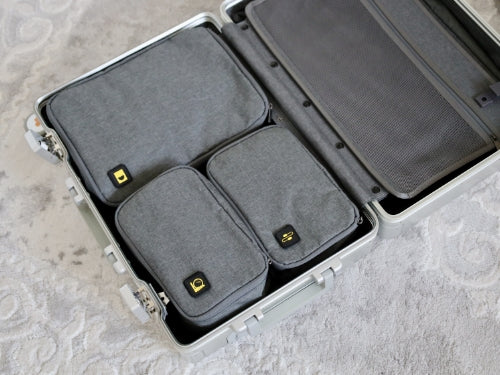
Because the liquid bag must be removed during security checks, it helps to keep it easy to access inside your carry-on. Choosing luggage with well-organized compartments can make the process smoother. For travelers who frequently pass through security checkpoints, top opening carry on luggage can provide faster access to frequently used items without fully opening the suitcase.
For example, a structured carry-on like the Voyageur Carry-On 20'' provides organized packing space that allows travelers to quickly reach their liquid bag without unpacking the entire suitcase.
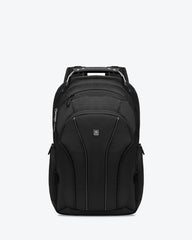
For items you want to access during the flight, some travelers also keep small essentials in a personal item. A travel backpack such as the LEVEL8 Urban Backpack can help separate toiletries, electronics, and documents, making it easier to stay organized throughout the airport journey.
Does the Container Size or the Amount Matter?
When it comes to TSA liquid limits, the container size matters more than the amount inside.
Even if a bottle contains only a small amount of liquid, it will not be allowed through security if the container itself is larger than 3.4 oz (100 ml). For example, a half-empty 6 oz shampoo bottle would still be rejected at the checkpoint.
To avoid problems, travelers should transfer liquids into travel-size containers that clearly meet the TSA limit or place larger items in checked baggage before arriving at the airport.
Conclusion
The TSA liquid limit follows the 3-1-1 rule, meaning liquids in carry-on luggage must be in containers of 3.4 oz (100 ml) or less and placed inside one quart sized bag per passenger. While certain items, such as medications and baby formula, are exempt, most liquids must follow this guideline. Checking your liquids before leaving for the airport and keeping them easy to access can help you move through security more smoothly.
FAQ
Do TSA liquid limits apply to international travel?
Many airports around the world follow similar carry-on liquid restrictions. However, security rules may vary by country or airport, so travelers should always check the regulations at their departure airport.
Can I bring water through the TSA?
Passengers generally cannot bring water through TSA security unless the container follows the 3.4 oz (100 ml) liquid limit. Larger bottles of water must be emptied before passing through the checkpoint. However, travelers can bring an empty water bottle and refill it after clearing airport security.
Can I bring frozen liquid on a plane?
Frozen liquids are generally allowed through airport security if they are completely frozen solid at the time of screening. If the item is partially melted, slushy, or contains liquid at the bottom, it will be treated as a liquid and must follow the TSA 3-1-1 rule.
What makeup is not considered a liquid?
Solid cosmetics such as powder foundation, pressed powder, lipstick, and solid deodorant are not considered liquids by TSA and do not need to follow the 3-1-1 rule. However, items like liquid foundation, mascara, lip gloss, and cream-based products are treated as liquids in carry-on luggage.
Will the TSA confiscate my perfume?
Perfume is considered a liquid under TSA rules. If the container is 3.4 oz (100 ml) or smaller, it can be carried in your quart-size liquid bag. Larger bottles must be packed in checked baggage or they may be confiscated at the security checkpoint.
How Many 3.4 oz Bottles Can You Bring?
TSA does not set an exact number of bottles you can bring. The only requirement is that all containers must fit inside one quart-size bag.
In most cases, a quart sized bag can hold about 6 to 9 travel-size containers, depending on their shape and size. Smaller bottles or flexible travel tubes may allow you to pack more items.
Keep in mind that if the bag cannot close properly, TSA officers may ask you to remove some items during screening.

Leave a comment