



Table of Content
Remote Work Travel Trends 2026

Remote work travel in 2026 is more practical, but also more planned. Travelers are no longer just taking a laptop to a beach town and hoping everything works. In this LEVEL8 guide, we look at how work-from-anywhere is changing travel, from slower routes and better Wi-Fi to work-friendly stays, lighter luggage, and destinations that fit company rules, time zones, and daily routines.
What Is Remote Work Travel in 2026?
Remote work travel means working from a location away from your usual home or office while still keeping your job, clients, meetings, and deadlines on track. It can be a long weekend workcation, a month in one city, a multi-city route, or a longer digital nomad stay.
In 2026, the biggest shift is that remote work travel is becoming more realistic and more structured. Workers are paying closer attention to internet reliability, employer approval, visa rules, tax risk, workspace quality, and how much they can comfortably carry.
Trend 1: Slow Travel Becomes More Practical Than Fast Travel
Remote workers are learning that moving less often usually makes work easier. Slow travel gives people time to settle in, test the internet, find a workspace, and build a routine.
Longer Stays Help Remote Workers Stay Productive
A longer stay gives remote workers a more stable base. Instead of spending every few days packing, checking out, and finding the next place, they can set up a desk, learn the neighborhood, and protect focus time.
This works especially well for people with regular meetings, deep work, or client deadlines. A two- to four-week stay is often easier to manage than a new city every three days.
Fewer Location Changes Reduce Travel Stress
Every location change adds planning: transport, luggage, check-in, groceries, workspace setup, and Wi-Fi testing. When remote workers reduce the number of moves, they also reduce the number of things that can interrupt a workday.
Fewer moves also make travel feel less rushed. Workers can explore after hours or on weekends without trying to squeeze a full vacation into every evening.
Mid-Term Rentals and Work-Friendly Stays Gain Importance
Remote workers are paying more attention to stays that support normal work routines. A good mid-term rental or hotel room now needs more than a nice view. Fast Wi-Fi, a real desk, enough outlets, laundry access, and quiet surroundings can matter more than being near every tourist attraction.
Trend 2: Hybrid Workers Turn Short Trips Into Workcations
Not every remote traveler wants to become a full-time digital nomad. Many hybrid workers are using flexible days to add short trips around weekends, holidays, or business travel.
Long Weekends and Flexible Fridays Create More Travel Windows
Flexible Fridays and remote Mondays make short workcations easier. A traveler might fly out Thursday night, work remotely on Friday, enjoy the weekend, and return Monday evening.
This style works well because it does not require a major lifestyle change. It gives hybrid workers more travel opportunities without leaving their job structure behind.
Business Trips Blend More Easily With Personal Travel
More travelers are adding personal days before or after business trips. A conference, client visit, or team meeting can become a longer stay if company policy allows it. This can also change what a business travel carry-on needs to hold, since meeting clothes and work gear may now need to share space with personal outfits and weekend essentials.
The key is separating company time from personal time. Flights, hotel billing, work hours, and expenses should be clear before the trip begins.
Short Remote Work Trips Feel More Realistic Than Full-Time Nomad Life
Full-time nomad life can sound appealing, but it is not realistic for every worker. Short remote work trips are easier to test. They let people learn what they need: better headphones, a lighter bag, backup internet, or fewer meetings on travel days.

Trend 3: Work-Friendly Stays Matter More Than Just Destinations
In remote work travel, the place you sleep is also the place where you may need to work. That makes accommodation quality more important than before.
Reliable Wi-Fi Becomes a Basic Travel Requirement
Remote workers now look for Wi-Fi details before booking. A listing that only says “free Wi-Fi” may not be enough. Travelers want reviews that mention video calls, speed tests, and stable connections.
Before important meetings, workers should test the connection, prepare a mobile hotspot or eSIM, and know where the nearest coworking space or quiet café is.
Quiet Workspaces and Desk Setup Affect Booking Decisions
A beautiful room is not useful if there is no desk, no chair, and nowhere to take a call. Remote workers are checking for real work surfaces, outlets near the desk, good lighting, and quiet surroundings.
This is especially important for travelers who take client calls, record content, teach online, or join meetings across time zones.
Coworking Spaces and Hotel Work Areas Become More Useful
Coworking spaces, hotel work lounges, and day-use office areas are becoming part of the remote work travel plan. They are useful when the accommodation Wi-Fi is weak, the room is noisy, or an important meeting requires a more professional setting.
For remote workers, a backup workspace can be as important as a backup internet plan.
Trend 4: Visas, Taxes, and Employer Rules Get More Attention
Remote work travel is not only a travel decision. It can also involve immigration, tax, payroll, insurance, and data security rules.
Digital Nomad Visas Are More Common but Still Complicated
More countries now offer digital nomad or remote work visa options, but the details vary widely. Some require proof of income, health insurance, foreign employment, background checks, or minimum stay periods.
Travelers should not assume a tourist stay allows remote work. The safest approach is to check official destination rules before planning a longer stay.
Employer Policies Limit Where Some People Can Work
A remote job does not always mean work-from-anywhere. Some employers limit which states or countries employees can work from. Others require approval for international work, restrict access to company data, or require secure networks.
Before booking, remote workers should confirm company policy, time zone expectations, device security rules, and whether the location is approved.
Longer Stays Can Create Tax and Compliance Questions
Longer stays can create tax or compliance questions for the worker and the employer. This may depend on where the worker lives, where the company is based, how long the stay lasts, and whether local rules treat the person as working in the country.
For longer remote work trips, travelers should speak with HR, payroll, or a tax professional before assuming the rules are simple.

Trend 5: Remote Workers Pack Lighter but Smarter
Remote workers often carry more tech than regular leisure travelers, but they are also learning to travel lighter. The trend is not just smaller bags. It is better organization.
Laptop Bags Become Part of the Travel Setup
A laptop bag is now part of the travel system, not an afterthought. It should hold a laptop, charger, headphones, notebook, passport, wallet, and small tech items that need to stay close.
For travel days, the laptop bag should be easy to open at security, comfortable enough for airport movement, and organized enough that cables do not disappear into the bottom.
Carry-On Luggage Works Better for Multi-City Work Trips
For multi-city work trips, carry-on luggage helps remote workers avoid baggage claim, move between hotels faster, and keep essentials nearby. This matters when a delayed bag could affect the next workday.
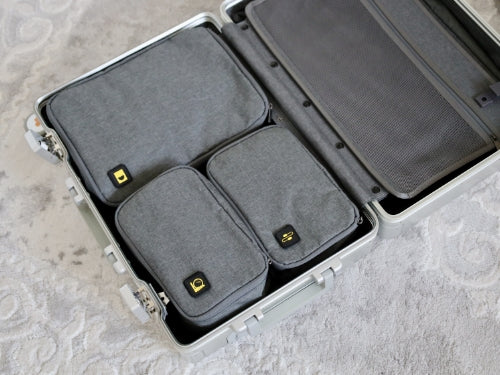
A carry-on with laptop access can be especially useful. The LEVEL8 Road Runner Carry-On 20'' fits this need with quick-access sleeves for a 17'' laptop and 10.9'' tablet, a German-made Makrolon® polycarbonate shell, TSA-approved dual lock, front-pocket lock, and 360° spinner wheels. It works well for remote workers who want one suitcase for clothing and device access without opening the main compartment every time they need a laptop.
Tech, Toiletries, and Clothing Need Better Separation
Remote workers need clear zones inside their bags. Laptop and chargers should stay easy to reach. Toiletries should be sealed and separated from clothing. Work clothes should not mix with laundry or shoes.
This kind of separation saves time, protects devices, and makes it easier to reset quickly in a hotel, rental, coworking space, or airport lounge.
Trend 6: AI and Flexible Planning Change Remote Work Travel
Planning is becoming more flexible because travelers have better tools. AI can help compare destinations, schedules, routes, and stays, but travelers still need human judgment for work needs and legal rules.
AI Tools Help Compare Destinations, Routes, and Stays
AI tools can help remote workers compare time zones, weather, flight routes, accommodation options, and rough budgets. They can also help build packing lists, estimate commute time, or plan a weekly schedule.
Still, travelers should verify important details like visa rules, hotel policies, internet quality, and local transportation before booking.
Flexible Booking Helps Travelers Adjust Work and Travel Plans
Remote work schedules can change quickly. A client call, team meeting, delayed flight, or bad Wi-Fi setup can affect the whole trip. Flexible booking gives travelers more room to adjust without losing the entire plan.
This is why refundable stays, changeable flights, and longer booking windows can be useful for remote work travel.
Remote Workers Need Backup Plans for Delays and Connectivity
Remote workers need backups for the problems most likely to interrupt work: flight delays, weak Wi-Fi, dead batteries, time zone mistakes, and lost access to files. A good plan includes mobile data, offline files, cloud backups, and a second place to work if the first one fails. When packing a portable charger in your carry-on, keep it easy to reach and check the airline’s battery rules before departure.
How to Prepare for Remote Work Travel in 2026
Before planning a remote work trip, start with work requirements, then build the travel plan around them. The best destination is not always the most exciting one. It is the place where you can work reliably and still enjoy the trip.
Prepare by checking:
- Employer policy for remote or international work
- Visa and entry rules for the destination
- Possible tax or compliance issues for longer stays
- Time zone fit with your team or clients
- Wi-Fi quality and backup internet options
- Desk, chair, outlets, and quiet workspace
- Coworking spaces or backup work locations
- Laptop, charger, adapter, headphones, power bank, and VPN
- Carry-on setup for tech, clothing, toiletries, and documents
- Flexible booking options in case plans change
Conclusion
Remote work travel in 2026 is becoming more planned, more practical, and more focused on reliability. Slow travel, hybrid workcations, better work-friendly stays, clearer policies, smarter packing, and AI-assisted planning are shaping how people work from the road.
The travelers who handle it best are the ones who treat work needs as part of the trip from the beginning. Stable Wi-Fi, legal permission, company approval, backup tools, and lighter luggage can make the difference between a stressful experiment and a travel routine that actually works.
FAQ
Is remote work travel still popular in 2026?
Yes. Remote work travel is still popular, but it is becoming more structured. Workers are paying closer attention to Wi-Fi, workspace quality, employer approval, visa rules, taxes, and realistic schedules.
What is the difference between remote work travel and digital nomad travel?
Remote work travel can be short-term, part-time, or occasional. Digital nomad travel usually means a more ongoing lifestyle where someone works remotely while moving between places for longer periods.
What do you need to work remotely while traveling?
You need a laptop, charger, headphones, stable Wi-Fi, backup internet, secure file access, VPN if required, travel documents, and a workspace where you can take calls and focus.
Can you work remotely from another country?
Sometimes, but it depends on your employer, visa status, destination rules, tax situation, and data security requirements. Check company policy and official entry rules before working from another country.
Leave a comment