



Table of Content
Digital Nomad Packing List: Essentials For International Travel

A digital nomad packing list should cover three needs: crossing borders, working reliably, and living comfortably between destinations. This guide explains what to pack by category, how to choose luggage, what belongs in your carry-on, and how to reduce weight for long-term international travel.
What to Consider Before Creating a Digital Nomad Packing List
Your destination, travel pace, and baggage allowance determine how much you can carry. Review these factors before building your list.
Destination Climate and Local Culture
Check seasonal temperatures, rainfall, humidity, and elevation. A tropical destination may still require a light jacket for air-conditioned offices, overnight buses, or mountain areas.
Research local dress customs as well. Religious sites and conservative destinations may require covered shoulders or longer pants. One lightweight outfit that works for these settings can prevent an unnecessary purchase after arrival.
Trip Length and Laundry Access
Pack according to the time between laundry days rather than the total length of your trip. About one week of clothing can support months of travel when you have regular access to a washer or local laundry service.
Choose quick-dry fabrics if laundry facilities will be limited. They are easier to wash in a sink and can dry overnight.
Airline Baggage Size and Weight Limits
Carry-on rules vary by airline, route, and ticket type. Check the dimensions and weight allowance for every flight, including regional connections and budget airlines.
When youmeasure luggage for a flight, include the wheels, handles, and any expanded sections. Weigh it fully packed and leave a small margin, since airport scales may differ from your home scale.
Travel Schedule and Transportation
A wheeled suitcase works well for airports, hotels, and cities with smooth sidewalks. A travel backpack may be easier on stairs, cobblestones, ferries, and routes involving frequent transfers.
Travelers who change accommodations every week should favor a lighter, simpler setup. If you plan to work while moving between destinations, build your work-and-travel schedule around meeting times, reliable internet, and dedicated travel days. Longer stays allow room for a few additional work or comfort items.
Complete Digital Nomad Packing List by Category
Organizing your list by category makes missing items easier to spot and helps prevent duplicate clothing, cables, and personal-care products.
Travel Documents and Entry Essentials
Pack the following documents:
- Passport and required visas
- Flight and accommodation confirmations
- Travel insurance details
- Driver’s license or international driving permit
- Required vaccination or health records
- Printed and digital document copies
- Emergency contact information
Check passport validity and blank-page requirements for every country on your itinerary. Store encrypted digital copies online and keep printed copies separate from the originals.
Remote Work and Tech Essentials
Your tech kit should support a normal workday without depending on a coworking space for basic equipment.
|
Item |
Packing guidance |
|
Laptop and sleeve |
Use a padded sleeve that fits in your personal-item bag |
|
Smartphone |
Download offline maps and travel apps before departure |
|
Travel adapter |
Confirm compatibility with every country on the route |
|
Chargers and cables |
Standardize around USB-C where possible |
|
Power bank |
Check airline capacity restrictions |
|
Headphones |
Noise cancellation helps during calls and flights |
|
Mouse and keyboard |
Choose compact versions only if used regularly |
|
External SSD |
Encrypt sensitive business and client files |
|
Internet backup |
Prepare an eSIM, local SIM, or portable hotspot |
Test the complete setup before leaving. Charge each device, open the SSD, connect through the adapter, and complete a video call with your travel headphones.
Clothing for International Travel
Build a capsule wardrobe with pieces that can be combined across work, sightseeing, and casual dinners. Pack:
- Lightweight everyday tops
- Comfortable pants or shorts
- Underwear and socks
- Sleepwear
- Packable waterproof jacket
- Warm mid-layer
- One work-appropriate outfit
- Swimwear when needed
- Climate-appropriate accessories
Plan clothing around a seven-day laundry cycle. Coordinated colors and multi-purpose pieces provide more outfit options without adding weight.
Shoes and Everyday Accessories
Most digital nomads need one pair of comfortable walking shoes and one lighter pair of sandals or casual shoes. Wear the heavier pair during transit.
Add sunglasses, a hat, a compact umbrella, a reusable water bottle, and a small daypack or crossbody bag. The smaller bag should hold your phone, wallet, passport, and power bank without becoming uncomfortable during a full day out.
Toiletries and Personal Care Items
Bring the products you use regularly:
- Toothbrush and toothpaste
- Deodorant
- Shampoo and body wash
- Skin care products and sunscreen
- Razor and hair care items
- Personal hygiene products
- Travel-size containers
Pack liquids in leak-resistant bottles and place them in a waterproof toiletry bag. A quick-dry towel can be useful in hostels or beach destinations, but check whether your accommodations already provide towels.
Medications and Health Essentials
Bring enough prescription medication for the planned trip, plus a reasonable supply for travel delays. Keep medicine in its original labeled packaging and carry prescription copies or a doctor’s letter.
A small health kit can include pain relievers, bandages, antiseptic wipes, allergy or stomach medication, insect repellent, hand sanitizer, and face masks. Check the destination’s medication rules because some common medicines may be restricted.
Money and Security Essentials
Carry a primary bank card, a backup card from a separate account, and a small amount of local currency. Store the backup card separately from your wallet.
Other useful security items include a luggage lock, bag tracker, password manager, VPN, and two-factor authentication backup codes. Separate cash, cards, and document copies so one lost bag does not remove access to everything.
Luggage and Packing Organizers
A practical setup may include a carry-on suitcase or travel backpack, a personal-item bag, packing cubes, a toiletry bag, a tech organizer, a laundry bag, and a waterproof pouch.
Travelers who want to keep the suitcase itself relatively light can consider the LEVEL8 Luminous Textured Carry-On 20". It weighs 7.7 pounds, holds 40 liters, and measures 14.5 × 9.2 × 21.5 inches including the wheels and handle. The divided interior helps separate clothes from smaller items, while the textured polycarbonate shell reduces the visibility of everyday scratches. Compare its full dimensions with your airline’s current cabin allowance before flying.
Compression bags work well for jackets and other bulky soft items, but they reduce volume rather than weight. Avoid compressing extra clothing simply because more space becomes available.

Carry-On Essentials for Flights
Keep valuable, medically necessary, and hard-to-replace items in your carry-on luggage:
- Passport and travel documents
- Laptop and valuable electronics
- Prescription medications
- Chargers and airline-approved power bank
- Wallet and payment cards
- One change of clothes
- Basic toiletries
- Snacks and an empty water bottle
Arrange documents and electronics near the top for easy access during security checks. Power banks usually need to remain in cabin baggage, subject to the airline’s current rules.
Digital nomads who need more organized interior space can consider the LEVEL8 Voyageur Carry-On 20". It provides 43 liters of capacity within a 15.1 × 9.8 × 21.3-inch case. The wide-handle design creates a flatter packing surface, while the compression system holds clothing in place. A separate wet-dry pocket can isolate damp swimwear or leaking toiletries. It weighs 8.1 pounds, so factor that into stricter cabin weight limits.

Digital Nomad Packing Tips for International Travel
Once the essentials are packed, use a few simple methods to improve organization and reduce avoidable baggage problems.
Use Packing Cubes to Save Space
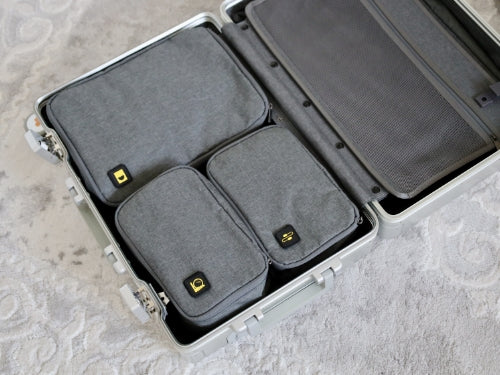
Organize packing cubes by category: tops, bottoms, underwear, and seasonal layers. This makes it easier to unpack at a short stay without emptying the entire suitcase.
Pack Work Essentials in Your Carry-On
Keep your laptop, external drive, chargers, headphones, and authentication devices with you. If checked luggage is delayed, you can still work from your hotel or a coworking space.
Place one compact charging kit near the top of the bag so you can work at the airport without unpacking all your electronics.
Check Your Luggage Weight Before Travel
Weigh every bag after packing and use the lowest allowance on your itinerary as the target. Budget airlines may apply stricter limits than the airline operating your main international flight.
Leave enough room for items picked up during the trip. If the bag is already at the limit, remove duplicate clothing, extra shoes, or rarely used devices before departure.
FAQ
What is the 5-4-3-2-1 rule when packing?
The 5-4-3-2-1 rule generally means packing five tops, four bottoms, three pairs of shoes, two layers or dresses, and one set of accessories. The categories vary, but the goal is to create multiple outfits from a small coordinated wardrobe.
Digital nomads can reduce the shoes to two pairs and use the saved space for work equipment.
What is the 3-3-3 packing rule?
The 3-3-3 rule usually includes three tops, three bottoms, and three pairs of shoes. The clothing should coordinate so the pieces can be combined into several outfits. For carry-on travel, two pairs of shoes are often more practical because footwear takes up substantial space.
What Is the most forgotten item when packing for vacation?
Chargers, toothbrushes, medication, and travel documents are frequently forgotten because they remain in use until shortly before departure.
Create a separate last-minute checklist and place it on top of your bag. Review it before leaving your home or hotel.
Is it better to roll or fold clothes in a suitcase?
Roll lightweight, wrinkle-resistant clothes such as T-shirts, shorts, and underwear. Fold structured shirts, jackets, jeans, and thick sweaters.
Using both methods makes better use of the suitcase: folded clothing creates flat layers, while rolled pieces fill narrow gaps.
What is the best way to pack jeans in a suitcase?
Fold jeans lengthwise and then fold them again to match the width of the suitcase. Place them near the wheel end so the heavier section stays at the bottom when the case is upright. Denim is thick, so rolling jeans rarely saves much space. Wear the heaviest pair during the flight when baggage weight is limited.
Conclusion
A useful digital nomad packing list covers documents, work equipment, medication, payment methods, one week of clothing, and a small set of everyday essentials. Choose luggage that fits the strictest airline on your route and keep critical work items in your carry-on.
Before leaving, weigh the packed bag and carry it up a flight of stairs. Remove duplicate clothing or optional devices if it already feels difficult to manage.


Leave a comment