



Table of Content
Can You Take a Lighter on a Plane? TSA Rules Explained

Yes, you can usually take one ordinary disposable or Zippo-style lighter on a plane in the United States. It must remain in your carry-on baggage or on your person. Torch lighters, gun-shaped lighters, lighter fluid, and butane refills are prohibited.
The answer changes with the lighter type, however. A standard Bic-style lighter, a fuel-burning Zippo, and a rechargeable arc lighter do not follow identical rules. Where you pack the lighter matters as much as what kind it is.
This article explains the current TSA and FAA requirements, how to identify your lighter, and what to do before reaching airport security.
Quick Answer: Which Lighters Can You Bring on a Plane?
For flights departing from the United States, the key distinction is between an ordinary flame lighter, a battery-powered lighter, and a torch lighter.
|
Lighter type |
Carry-on or on your person |
Checked baggage |
|
Disposable butane lighter |
One permitted |
Fuelled lighter generally prohibited unless packed under the DOT exemption |
|
Zippo-style absorbed-fuel lighter |
One permitted |
Empty lighter permitted; fuelled lighter requires a DOT-approved case |
|
Arc, plasma, or electronic lighter |
Permitted with safety precautions |
Prohibited |
|
Torch, jet-flame, or blue-flame lighter |
Prohibited |
Prohibited |
|
Gun-shaped lighter |
Prohibited |
Prohibited |
|
Lighter fluid or butane refill |
Prohibited |
Prohibited |
|
Unabsorbed liquid-fuel lighter |
Prohibited |
Prohibited |
The FAA limits ordinary butane and absorbed-liquid lighters to one per passenger in the cabin. The agency’s current PackSafe lighter rules also state that torch lighters cannot travel in either cabin or checked baggage.
TSA makes the final decision at the checkpoint. An item that is normally permitted may still be rejected if it appears modified, damaged, or capable of creating a security threat.
Carry-On Rules Depend on the Type of Lighter
Knowing the lighter’s fuel source and flame style prevents most packing mistakes. Color, price, and brand name are not reliable ways to determine whether it is permitted.
Disposable and Zippo-Style Lighters
An ordinary disposable butane lighter produces a soft yellow flame. A traditional Zippo-style model burns liquid fuel held in an absorbent lining. Under current FAA rules, a passenger may carry one of these lighters in the cabin, either on their person or inside their carry-on luggage.
Keeping it somewhere accessible is sensible, particularly on a crowded flight. If airline staff gate-check your cabin bag, remove the lighter before handing over the suitcase and retain it with you in the cabin. The FAA specifically requires this when a carry-on containing a lighter is checked at the gate or planeside.
Do not confuse a standard butane lighter with a butane torch. A regular disposable model creates a softer, less concentrated flame that changes direction when tilted. A torch produces a narrow, forceful blue flame that often continues burning at different angles.
Electric, Arc, and Plasma Lighters
Rechargeable arc and plasma lighters use lithium batteries to create an electric arc instead of a conventional flame. They are allowed only in carry-on baggage or on your person—not in checked luggage.
The activation control must be protected so the lighter cannot switch on accidentally. A fitted case, locking switch, safety latch, or removed battery may provide that protection, depending on the design. Placing an exposed touch-sensitive lighter loosely beside keys and charging cables is not sufficient.
FAA limits also apply to the battery: a lithium-ion battery may not exceed 100 watt-hours, while a lithium-metal battery may contain no more than 2 grams of lithium. Consumer pocket lighters are usually far below those thresholds, but damaged, swollen, or recalled battery-powered products should not be packed.
You may not recharge an electric lighter during the flight. This restriction applies even when the lighter can be connected to the same USB power source used for a phone.
Torch and Jet-Flame Lighters
Torch, jet-flame, and blue-flame lighters are prohibited in both carry-on and checked baggage. These models produce a concentrated, air-propelled flame and are commonly used for cigars, culinary work, or small workshop tasks.
Changing the flame setting, emptying the visible reservoir, or removing the ignition button does not automatically make a torch lighter acceptable. TSA classifies the item by what it is designed to do, not simply by whether it appears to contain fuel at the checkpoint.
When the design is uncertain, look at the flame outlet. A torch lighter often has a rigid nozzle or burner head rather than the small open wheel-and-guard arrangement found on a disposable lighter. Leaving an uncertain model at home is safer than relying on a visual explanation during screening.

Can You Put a Lighter in Checked Luggage?
A fuelled lighter should normally stay out of checked baggage. Fire involving a lighter is easier to notice and address in the cabin than inside an inaccessible cargo hold.
TSA permits empty disposable and Zippo-style lighters in checked bags. It also recognizes a Department of Transportation exemption allowing up to two fuelled disposable or Zippo-style lighters in checked baggage when each is properly enclosed in a DOT-approved lighter case. An ordinary pouch, toiletry bag, food container, or hard-shell suitcase does not qualify as that protective case.
That exception does not extend to torch lighters, lighter fluid, or butane refill canisters. Those remain prohibited.
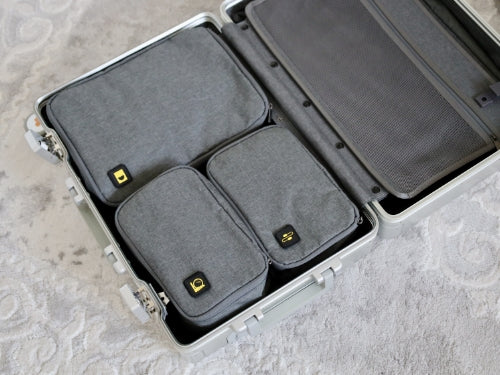
A suitcase’s closure and lock do not alter dangerous-goods rules. A frame-and-latch design such as the Hegent zipperless carry-on can provide structured access and avoid a conventional zipper, but it cannot make restricted contents acceptable. TSA-recognized luggage locks allow authorized inspection; they are not approval for what is packed inside.
The simplest approach is to carry one permitted ordinary lighter with you in the cabin and leave fuel containers at home. It avoids the narrow checked-bag exception and the need to confirm whether a case has DOT approval.
How to Pack a Permitted Lighter Safely
Once you have confirmed that the lighter type is allowed, pack it to prevent accidental operation and make it easy to remove if your bag is gate-checked.
- Protect the ignition switch or button from pressure.
- Keep the lighter away from loose metal objects and heat sources.
- Do not carry spare lighter fluid or butane cartridges.
- Check for leaks, damage, unusual heat, or battery swelling.
- Remove the lighter before surrendering a carry-on at the gate.
- Never use, recharge, or refill a lighter aboard the aircraft.
A small protective case is useful for an electric lighter, provided it prevents activation rather than merely covering the device. An ordinary disposable lighter can remain in a secure pocket where the ignition wheel will not be rubbed or compressed by other objects.
Do not bury a lighter under tightly compressed clothing if there is a chance your bag will be checked at the gate. A well-organized travel packing list keeps cabin-only items accessible, so you can retrieve the lighter without unpacking the entire case beside the boarding door.
Other everyday belongings follow different rules. Power banks generally belong in the cabin, while many blades, combustible materials, and larger liquid containers do not. Reviewing the relevant items not allowed in carry-on baggage helps prevent the assumption that every restricted object is handled like a lighter.
U.S. Rules May Not Apply to the Rest of Your Trip
TSA controls security screening at U.S. airports, while FAA requirements address hazardous materials aboard aircraft. Neither automatically determines what another country’s airport authority permits.
A connecting or return flight may therefore follow a different procedure. In the United Kingdom, current government guidance generally allows one lighter, but requires the passenger to keep it on their person throughout the flight. It cannot be placed in hold baggage and should not be returned to hand luggage after screening. That is a useful illustration of why a lighter accepted on the outbound U.S. flight may need to be handled differently later.
Airlines may also impose tighter conditions than the general government allowance. Before an international itinerary, check:
- The departure airport’s security authority
- The operating airline, including each codeshare carrier
- The rules at any airport where you will clear security again
- The destination’s laws on possessing the lighter itself
Rules can change, so verify them again shortly before departure rather than relying on what was accepted during an earlier trip.
Conclusion
You can take a lighter on a plane in the United States when it is one ordinary disposable butane or absorbed-fuel Zippo-style lighter carried in the cabin. Electric arc and plasma lighters may also travel in the cabin when protected against accidental activation, but they cannot be checked or recharged aboard the aircraft.
Leave torch lighters, gun-shaped lighters, lighter fluid, butane refills, and unabsorbed liquid-fuel models at home. Although a limited DOT-approved checked-baggage exception exists for certain fuelled lighters, carrying one permitted ordinary lighter with you is usually the clearest option.
Confirm the lighter type before packing, account for every security checkpoint on an international itinerary, and remember that the TSA officer has final authority at a U.S. checkpoint.
Frequently Asked Questions
Can I bring a Bic lighter through TSA?
Yes. One ordinary disposable butane lighter, such as a typical Bic-style model, is generally permitted in carry-on baggage or on your person. It should not be confused with a torch or jet-flame lighter.
Can I carry a Zippo lighter on a plane?
You may carry one absorbed-fuel Zippo-style lighter in the cabin. An empty Zippo may go in checked baggage. A fuelled one can be checked only under the limited DOT exemption and inside an approved lighter case.
Can I bring two lighters in my carry-on?
FAA guidance limits ordinary absorbed-liquid and butane lighters to one per passenger in the cabin. Do not rely on the checked-baggage provision allowing up to two approved lighters in DOT cases; it is a separate exemption with different packing requirements.
Are matches allowed on a plane?
One book of safety matches is generally permitted on your person or in carry-on baggage, but safety matches cannot go in checked luggage. Strike-anywhere matches are prohibited. Because match and lighter allowances can be interpreted together under dangerous-goods rules, verify the current TSA, FAA, and airline instructions if you intend to carry both.
What happens if TSA finds a prohibited lighter?
The lighter will not be allowed through the checkpoint. Depending on the airport’s available options and the circumstances, you may need to surrender it, return it to a vehicle, or give it to someone who is not traveling. Allowing extra time does not guarantee that storage or mailing services will be available.


Leave a comment