



Table of Content
Best Hardside Luggage: How to Choose a Durable Suitcase

Choosing the best hardside luggage is less about style and more about durability, structure, and travel efficiency. A well-designed hard shell suitcase protects your belongings, maximizes packing space, and holds up over years of use. This guide focuses on what actually matters so you can pick a suitcase that performs, not just looks good.
Benefits of Hardside Luggage
Hardside luggage is often chosen for protection and structure, especially when reliability matters more than flexibility. Compared with softside bags, it offers more predictable performance under pressure. In short, it’s better suited for travelers who check luggage or carry fragile items.
Stronger Protection for Your Belongings
One of the most noticeable benefits is structural protection. A rigid shell distributes impact more evenly than soft materials, which helps reduce the risk of damage during handling. This is especially relevant for checked luggage, where bags are frequently stacked, dropped, or compressed.
Better Resistance to Water and Weather
Hardside suitcases typically offer better resistance to moisture. While not fully waterproof, they provide a barrier against rain, spills, and damp environments, helping keep contents dry during transit.
More Structured and Efficient Packing
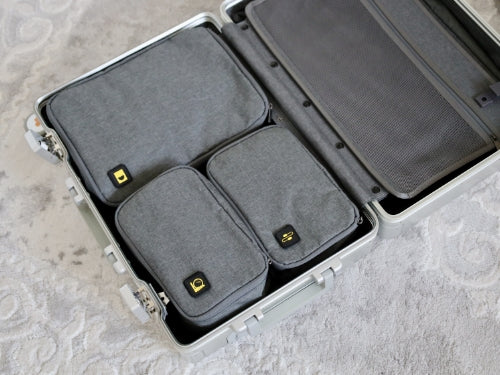
Because the shell holds its shape, packing becomes more predictable. Clothes remain flatter, and items are less likely to shift during movement. This also makes it easier to organize belongings using compartments and dividers.
Enhanced Security During Travel
Many hardside suitcases are designed with integrated locking systems, including TSA-approved locks or reinforced closures. Compared with softside bags, they present fewer weak points, which can improve security when traveling through busy airports.
These advantages make hardside luggage a practical choice when protection and consistency matter more than flexibility.
Best Hardside Luggage for 2026
After understanding why hardside luggage is worth considering, the next step is seeing how those benefits translate into real products. In practice, differences in structure, access, and material quality can significantly affect how a suitcase performs during travel. The following options focus less on specs alone and more on how they function in everyday use.

Voyageur Check-In
For longer trips, capacity alone is not enough. How that space is designed matters just as much. The Voyageur Check-In stands out by improving usable packing space rather than simply increasing volume.
Its wide handle system removes the typical internal ridges caused by trolley tubes, creating a flatter interior. This makes a noticeable difference when packing bulkier items like coats or shoes, where uneven surfaces usually waste space.
Key features:
- Wide handle design that maximizes flat packing space
- German-made Makrolon polycarbonate shell for durability and flexibility
- Built-in compression system to stabilize contents
- Smooth, quiet spinner wheels for easier handling
Overall, this is a suitcase built for consistency over long trips, where durability and packing efficiency become more important than compactness.
Best for: long-haul travel, checked baggage, heavy packing
Adventure Carry-On 20''
Carry-on luggage is less about capacity and more about efficiency in movement and access. The Adventure Carry-On 20'' is designed with this in mind, especially for travelers who need quick access during transit.
The front-opening compartment changes how you interact with the suitcase. Instead of opening the entire case, you can access essentials like laptops or documents on the go, which is particularly useful at airport security or during short stops.
It also features a more rigid aluminum frame, giving the suitcase a solid feel and reducing flex during frequent handling.
Highlights:
- Front-opening design for quick access to essentials
- Aluminum frame construction for added structural strength
- Expandable capacity for flexible packing
- Compact size aligned with common airline carry-on limits
This type of suitcase works well when your travel routine involves frequent stops, quick access, and minimal unpacking.
Best for: business trips, short travel, organized carry-on use
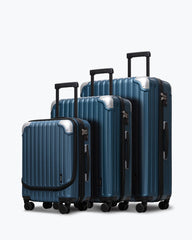
Luminous Textured 2 Piece Set
For travelers who alternate between short and long trips, having a coordinated luggage set can simplify packing decisions. Instead of choosing different suitcases each time, a set provides consistency in both function and style.
The Luminous Textured 2 Piece Set focuses on long-term usability. Its textured surface helps reduce the visibility of scratches, which is a common issue with smooth hardside finishes after repeated use.
At the same time, the lightweight construction makes both pieces easier to handle, whether lifting into overhead bins or navigating stairs and tight spaces.
What makes this set practical:
- Textured polycarbonate shell that hides surface wear
- Lightweight build for easier lifting and movement
- Two sizes covering both carry-on and checked travel
- Consistent design across different trip types
Rather than optimizing for a single scenario, this set is built for flexibility across different travel needs.
Best for: mixed travel scenarios, frequent travelers, all-in-one setup
Key Features to Look for in the Best Hardside Luggage
While product designs may look similar at first glance, small differences in materials and structure can significantly affect long-term use. Focusing on a few core features makes it easier to judge whether a suitcase will actually perform well during travel.
Durable Shell Materials
Material is the foundation of durability. Polycarbonate is widely considered the most reliable option because it combines strength with flexibility. Instead of cracking under pressure, it bends slightly and returns to shape, which extends the lifespan of the suitcase.
Smooth Spinner Wheels
Wheels directly affect how the suitcase feels in motion. High-quality spinner wheels allow the bag to glide in multiple directions with minimal effort. This becomes particularly important in large airports or when carrying heavier loads.
Interior Organization and Capacity
A well-designed interior makes a noticeable difference in packing efficiency. Features like compression straps, zippered dividers, and dedicated compartments help keep items in place and make better use of available space.
Secure Locking Systems
Security features vary depending on design. TSA-approved locks are essential for international travel, while aluminum frame constructions provide additional protection by eliminating zipper entry points.
Lightweight Construction
Weight influences both usability and airline restrictions. A lighter suitcase allows you to pack more without exceeding limits, while also making it easier to lift and maneuver.
Quick Feature Comparison:
|
Feature |
What to Look For |
Practical Benefit |
|
Shell material |
Polycarbonate |
Long-term durability |
|
Wheels |
Smooth spinner wheels |
Easier movement |
|
Interior |
Organized compartments |
Efficient packing |
|
Locks |
TSA or frame lock |
Better security |
|
Weight |
Lightweight build |
Easier handling |
Taken together, these features determine how well a suitcase performs over time, especially under the repeated stress of real travel conditions.

Common Materials Used in Hardside Luggage
Understanding material differences helps clarify why some suitcases perform better than others. Each material offers a different balance of durability, weight, and cost.
Polycarbonate
Polycarbonate is known for its flexibility and strength. It absorbs impact without cracking, which makes it ideal for frequent travelers or those checking luggage regularly.
Polypropylene
Polypropylene is lighter and often more affordable. It still provides decent durability but does not offer the same level of flexibility as polycarbonate.
ABS
ABS is typically used in entry-level luggage. It is rigid and cost-effective but more prone to cracking under heavy impact, making it better suited for occasional use.
Polycarbonate is generally the best material for hardside luggage because it combines high impact resistance with flexibility, reducing the risk of cracking during travel.
Conclusion
The best hardside luggage is the one that delivers lasting durability, smooth handling, and efficient packing in real travel conditions. These fundamentals are what separate the best hardside luggage from options that only look durable on the surface.
A polycarbonate shell, reliable spinner wheels, and a well-structured interior are not just features, they are what make a suitcase easier to use on every trip. When these fundamentals are done right, you spend less time adjusting your luggage and more time focusing on the journey itself.
FAQ
What is the most durable material for hardside luggage?
Polycarbonate is the most durable luggage option. It flexes under impact instead of cracking, making it especially suitable for frequent travel or checked luggage that goes through rough handling.
Is polycarbonate luggage better than ABS?
Yes. Polycarbonate is stronger and more impact-resistant, while ABS is more rigid and more likely to crack over time. ABS can still work for occasional trips, but polycarbonate is more reliable for regular use.
Does hardside luggage scratch easily?
Minor scratches are common, especially on smooth finishes. Textured shells are better at hiding wear, which makes them a more practical choice for frequent travelers.
Are hardside suitcases waterproof?
Hardside luggage is water-resistant rather than fully waterproof. It can handle rain and light exposure to moisture, but it is not designed to keep water out in heavy or prolonged conditions.
What size hardside luggage is best for international travel?
A 20-inch carry-on works well for short international trips or light packing. For longer trips, a 24 to 28-inch checked suitcase offers more flexibility, especially if you need to pack for multiple climates or bring items back.

Leave a comment